Understanding roman warfare is essential to understanding how Rome transformed from a small city-state into one of the most powerful empires in history. Roman warfare was not based on brute force alone, but on discipline, organization, adaptability, and long-term strategy. Over centuries, the Romans refined their military system into a highly efficient machine capable of conquering diverse enemies across Europe, North Africa, and the Middle East. This article explores how Roman warfare functioned, why it was so effective, and why its legacy still matters today.
Roman warfare shaped not only Rome’s borders, but also its society, economy, and identity. Every conquest brought new challenges, and the Roman army evolved continuously to meet them.
The Foundations of Roman Warfare
At its core, roman warfare was built on structure and discipline. Roman soldiers were trained to operate as part of a system rather than as individual warriors. This approach distinguished them from many of their opponents, who often relied on personal bravery or tribal cohesion.
The Roman army was highly standardized. Equipment, training routines, command structures, and battlefield tactics followed strict rules. This standardization allowed Roman units to coordinate effectively, replace losses quickly, and maintain cohesion even under extreme pressure.
Roman warfare emphasized preparation. Before battles, Roman commanders carefully selected terrain, constructed fortified camps, and planned supply lines. Victory often depended on logistics and organization long before the first clash of weapons.
Roman Soldiers and Military Organization
The backbone of roman warfare was the legion. Each legion consisted of thousands of professional soldiers divided into smaller units that could maneuver independently. This structure gave Roman commanders flexibility and control on the battlefield.
Roman soldiers were trained extensively in marching, formation fighting, weapon handling, and discipline. They practiced maintaining formation under stress, rotating ranks, and responding instantly to commands. This training ensured that Roman armies rarely descended into chaos, even during fierce combat.
Command hierarchy was clear. Orders flowed from generals to officers to ordinary soldiers, minimizing confusion. This organizational clarity allowed Roman warfare to function efficiently across vast distances and diverse terrains.
Weapons and Equipment in Roman Warfare
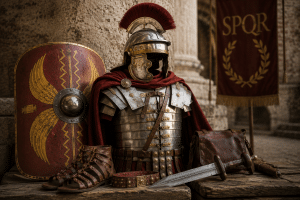
Roman warfare relied on practical, efficient weapons rather than elaborate or ceremonial arms. The short sword, heavy shield, and throwing javelin formed a deadly combination designed for close combat and formation fighting.
Roman equipment was designed to work as part of a system. Soldiers advanced together, using shields to protect one another while striking in coordinated movements. This collective approach made Roman formations extremely difficult to break.
Armor and weapons evolved over time, reflecting Rome’s adaptability. Roman warfare absorbed useful elements from defeated enemies, integrating new techniques and equipment into existing systems. This willingness to adapt was a key reason for Rome’s long-term success.
Battlefield Tactics and Discipline
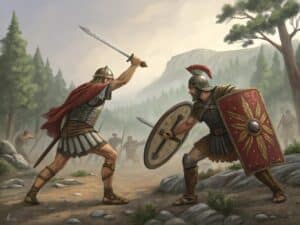
Roman warfare emphasized controlled aggression. Battles were not chaotic charges, but carefully managed engagements. Roman troops advanced methodically, maintaining formation and discipline even under missile fire or enemy pressure.
One of the defining features of roman warfare was the use of reserves. Roman commanders held back fresh troops, deploying them at decisive moments. This strategy allowed Roman armies to outlast opponents who committed all their forces too early.
Discipline was enforced through strict punishment. Desertion, cowardice, or disobedience were met with severe consequences. While harsh, this system ensured reliability and cohesion, making Roman armies predictable to commanders and terrifying to enemies.
Siege Warfare and Engineering
Roman warfare extended far beyond open-field battles. Sieges were a central component of Roman military strategy. Roman armies were skilled at surrounding, isolating, and systematically reducing fortified cities.
Roman soldiers were also engineers. They built siege towers, battering rams, ramps, trenches, and walls. These skills allowed Rome to overcome even the most formidable defenses.
Famous sieges demonstrated Rome’s patience and persistence. Rather than relying on reckless assaults, Roman warfare favored methodical pressure, cutting off supplies and weakening resistance over time.
Logistics and Supply Systems
One of the greatest strengths of roman warfare was logistics. Roman armies could operate far from home because they maintained reliable supply systems. Roads, depots, and disciplined marching ensured steady access to food, weapons, and reinforcements.
Roman soldiers also built fortified camps at the end of each day’s march. These camps provided security, organization, and morale, allowing armies to rest safely even in hostile territory.
This logistical sophistication made Roman warfare sustainable over long campaigns, giving Rome an advantage over enemies who relied on local resources or irregular supply.
Roman Warfare as a Tool of Control
Roman warfare was not only about conquest, but also about maintaining control. Military presence enforced Roman law, suppressed rebellions, and protected trade routes.
Veteran soldiers were often settled in conquered territories, spreading Roman culture and reinforcing loyalty. Forts and garrisons ensured long-term stability, turning temporary victories into permanent control.
In this way, roman warfare became a foundation of Roman governance. Military success and political authority were inseparable.
Psychological Warfare and Symbolism
Roman warfare also operated on a psychological level. The sight of disciplined troops, standardized equipment, and powerful symbols such as standards and eagles intimidated enemies before battles even began.
Public displays of victory, including triumphs and monuments, reinforced Roman dominance and discouraged rebellion. These symbolic elements were as important as physical force in maintaining empire-wide control.
Adaptation and Evolution
One reason roman warfare remained effective for centuries was its adaptability. Rome faced diverse enemies: tribal warriors, professional armies, cavalry-based forces, and guerrilla fighters.
Instead of rigidly clinging to tradition, Roman commanders adjusted tactics, formations, and strategies as needed. This flexibility allowed Roman warfare to survive changing conditions and opponents.
The Decline of Roman Warfare
Over time, economic strain, political instability, and external pressures weakened the Roman military system. Recruitment challenges, reduced discipline, and overextension gradually undermined Roman warfare.
Despite these challenges, the principles developed by Rome continued to influence later military systems long after the empire’s decline.
The Legacy of Roman Warfare
The legacy of roman warfare is profound. Concepts such as professional armies, standardized training, military engineering, logistics, and disciplined formations remain central to modern military thought.
Roman warfare shaped not only Rome’s empire, but also the development of Western military tradition.
For deeper exploration of Roman military history, visual reconstructions, and historical analysis, visit our website
Frequently Asked Questions (FAQ)
What is roman warfare?
Roman warfare refers to the military system, tactics, and strategies used by the Roman army to conquer and control its empire.
Why was roman warfare so effective?
Because it combined discipline, organization, engineering, logistics, and adaptability, allowing Rome to defeat diverse enemies.
How does roman warfare influence modern armies?
Many modern military principles—such as professional service, standardized training, and battlefield discipline—originate from Roman warfare.