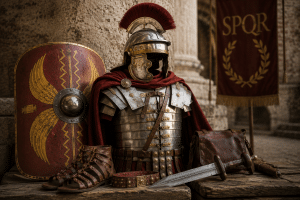
The term roman empire flag is often used by history enthusiasts searching for the banners and symbols that represented Rome at the height of its power. While the Roman Empire did not use a national flag in the modern sense, it relied on a sophisticated system of military standards, imperial emblems, and banners that served as powerful symbols of authority, unity, and military discipline. Understanding the concept of the roman empire flag offers a fascinating insight into how Rome projected its identity across three continents and maintained control over one of the largest empires in history.
Today, images associated with the Roman Empire flag remain among the most recognizable symbols of the ancient world. From the famous eagle standards carried by legionaries to the iconic SPQR insignia, these emblems continue to inspire historians, artists, reenactors, and visitors interested in Roman military culture. At our website , you can explore the military history, artifacts, and visual heritage that made Rome one of history’s most influential civilizations.
What Was the Roman Empire Flag?
Unlike modern nations, Rome did not possess a single official national flag. Instead, Roman identity was represented through a variety of military standards known as signa, vexilla, and aquilae. These standards functioned as symbols of military authority, imperial legitimacy, and collective identity.
The closest equivalent to a roman empire flag was the vexillum, a square piece of cloth suspended from a horizontal crossbar attached to a pole. These banners often displayed military symbols, unit designations, or references to the emperor. They were carried into battle, displayed during ceremonies, and used throughout the empire to represent Roman authority.
Alongside these banners stood the most revered military emblem of all: the legionary eagle. Each legion possessed its own eagle standard, known as the aquila, which embodied the honor and spirit of the unit.
The Eagle: Rome’s Most Powerful Symbol
No discussion of the roman empire flag is complete without examining the eagle. Introduced as the primary legionary symbol during the reforms of Gaius Marius in the late Republic, the eagle became the ultimate representation of Roman military power.
The eagle symbolized Jupiter, king of the Roman gods, and represented divine protection over Rome’s armies. Losing an eagle in battle was considered a national disgrace, while recovering a lost eagle was celebrated as a major victory.
Legionaries swore loyalty to their standards and often defended them with their lives. The eagle was more than an emblem—it was the embodiment of the legion itself. Many modern depictions of the Roman Empire flag incorporate the eagle because of its central role in Roman military culture.
Roman Banners and Military Standards
Roman Empire Flag and the Vexillum
The vexillum was perhaps the closest object to what modern audiences imagine when they think of a roman empire flag. Typically made from red cloth, these banners were attached to a crossbar and displayed inscriptions, symbols, or images associated with a particular military unit.
Red was a common color because it symbolized strength, victory, and martial power. Gold lettering and decorative elements often enhanced the prestige of these standards.
The vexillum served practical purposes on the battlefield. Soldiers could identify their unit’s location, maintain formation, and follow commands by keeping sight of their banner.
SPQR and Imperial Identity
Among the most famous inscriptions associated with Roman banners is SPQR, short for Senatus Populusque Romanus—“The Senate and People of Rome.”
This phrase appeared on military standards, monuments, public buildings, and official documents. SPQR symbolized the authority of the Roman state and became one of the most enduring symbols of Roman civilization.
Many modern artistic interpretations of the Roman Empire flag prominently feature SPQR alongside the eagle, creating an instantly recognizable representation of ancient Rome.
The Role of Standards in Roman Warfare
Roman military standards played a crucial role in battle. Beyond their symbolic significance, they served practical and psychological functions.
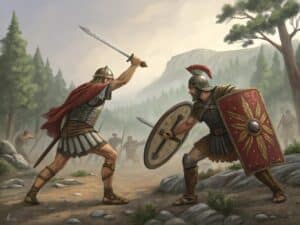
In the confusion of combat, standards acted as rallying points. Soldiers could locate their commanders, maintain formation, and coordinate movements by following their standard-bearers.
Standard-bearers, known as signiferi and aquiliferi, held prestigious positions within the legion. Carrying the standard required courage and loyalty because these men often became prime targets for enemy attacks.
The visibility of Roman banners helped reinforce discipline. The sight of standards advancing steadily forward reminded soldiers of their duty and encouraged them to maintain cohesion even under intense pressure.
Imperial Propaganda and Visual Power
Roman leaders understood the importance of visual symbolism. Emperors frequently used military standards and banners to reinforce their authority.
Victorious armies marched beneath richly decorated standards during triumphal processions in Rome. Coins, sculptures, and monuments often depicted emperors standing beside legionary eagles and banners, emphasizing their role as commanders and protectors of the empire.
These visual messages communicated power not only to Roman citizens but also to conquered peoples. Wherever Roman standards appeared, they signaled the presence of imperial authority.
This use of symbolism helped unify an empire that stretched from Britain to the Middle East and from the Rhine to North Africa.
The Roman Empire Flag in Modern Culture
Although no official national Roman flag existed, modern culture has embraced various designs inspired by Roman symbols.
Historical reenactment groups often use banners featuring SPQR, legionary eagles, and red backgrounds. Museums, films, documentaries, and video games frequently display reconstructed Roman standards to help audiences visualize the ancient world.
The popularity of the Roman Empire flag reflects a broader fascination with Roman history. These symbols evoke ideas of discipline, military excellence, engineering achievement, and imperial grandeur.
For those interested in historically accurate representations of Roman military culture, websites such as Res Militares provide valuable insights into the equipment, standards, and visual identity of the Roman army.
Why Roman Symbols Still Matter Today
The enduring appeal of Roman banners lies in their ability to communicate powerful ideas through simple imagery. The eagle represents strength. SPQR represents civic authority. The red banner symbolizes military discipline and unity.
These symbols survived the fall of the empire and continued to influence later states, armies, and political movements throughout Europe. Even today, Roman imagery remains instantly recognizable around the world.
Studying the roman empire flag helps us understand how ancient societies used visual symbols to create identity, inspire loyalty, and project power. It also reveals how deeply Roman culture continues to influence modern perceptions of authority and civilization.
The roman empire flag was not a single national banner but a collection of military standards, symbols, and emblems that represented the strength and identity of Rome. From the legendary eagle standards to the famous SPQR inscription, these symbols helped unite soldiers, inspire citizens, and project imperial power across vast territories.
Their legacy continues to fascinate historians, artists, and visitors seeking to understand the world of ancient Rome. To discover more about Roman military history, legionary equipment, and authentic reconstructions, visit our website and explore the enduring heritage of Rome’s greatest symbols.
FAQ:
Did the Roman Empire have an official national flag?
No. The Roman Empire did not have a national flag in the modern sense. Instead, it used military standards such as the vexillum and the eagle standard to represent authority and identity.
What did the Roman Empire flag look like?
The concept of a roman empire flag is usually represented today by a red banner featuring the SPQR inscription, a golden eagle, or other Roman military symbols.
What does SPQR mean on Roman banners?
SPQR stands for Senatus Populusque Romanus, meaning “The Senate and People of Rome,” and was one of the most important symbols of Roman state authority.