The colosseum rome capacity is one of the most fascinating aspects of this iconic monument, offering insight into the scale, organization, and power of ancient Roman society. As the largest amphitheater ever built, the Colosseum was not just an architectural achievement—it was a symbol of Rome’s ability to entertain, control, and impress massive audiences.
Understanding how many people the Colosseum could hold helps us better appreciate the scale and organization of Roman spectacles. It highlights how efficiently the Romans managed large crowds and orchestrated complex events that combined entertainment, social order, and imperial messaging.
Colosseum Rome Capacity and Its Engineering Marvel
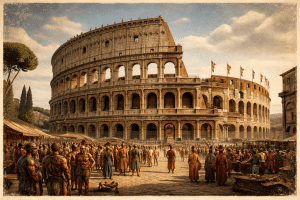
The colosseum rome capacity is estimated to have ranged between 50,000 and 65,000 spectators. This massive number was made possible by advanced Roman engineering, which allowed for efficient crowd management and impressive structural stability.
The amphitheater featured:
- Multiple tiers of seating arranged by social class
- Over 80 entrances to allow rapid access and exit
- A sophisticated system of corridors and stairways
- Underground chambers (hypogeum) for animals and fighters
This design ensured that large crowds could be accommodated safely and efficiently, something that even modern stadiums strive to achieve.
The seating arrangement also reflected Roman society. The emperor and elite sat closest to the arena, while ordinary citizens occupied higher levels. This structure reinforced social hierarchy while allowing everyone to participate in public spectacles.
Why Colosseum Rome Capacity Was So Important
The significance of the colosseum rome capacity goes beyond numbers. It reflects the importance of public entertainment in maintaining political stability and social cohesion in ancient Rome.
Large-scale events served multiple purposes:
- Demonstrating the power and wealth of the empire
- Entertaining the population and preventing unrest
- Celebrating military victories and imperial authority
The ability to gather tens of thousands of people in one place was a powerful statement. It showed that Rome could organize, control, and entertain its citizens on an unprecedented scale.
These events were often funded by emperors, who used them to gain popularity and reinforce their status.
Gladiators, Soldiers, and the Arena Experience
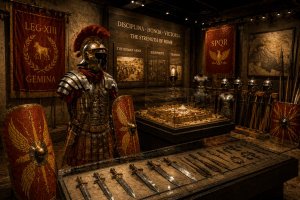
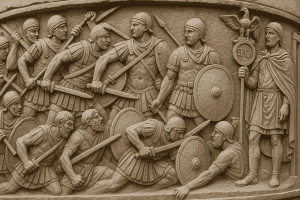
While the Colosseum is most famous for gladiatorial combat, Roman soldiers also played an important role in these events. The connection between the arena and the military highlights another layer of meaning behind the colosseum rome capacity.
Gladiators were trained fighters, often slaves or prisoners, who performed for the crowd. Roman soldiers, on the other hand, represented discipline, order, and the strength of the empire.
In some cases, soldiers:
- Participated in staged battles
- Maintained order during events
- Demonstrated military techniques
This combination of entertainment and military display made the Colosseum a unique space where spectacle and power intersected.
From Colosseum Rome Capacity to Real Experiences in Rome
Understanding the colosseum rome capacity is just the beginning. To truly connect with this history, modern visitors can take part in experiences that recreate aspects of Roman life.
At places like Res Militares, you can:
- Explore Roman military training techniques
- Learn about the role of soldiers in Roman society
- Participate in activities inspired by ancient practices
By visiting Res Militares, you can move beyond observation and engage directly with history.
This approach allows you to better understand the people behind the spectacles—the soldiers, trainers, and organizers who made events in the Colosseum possible.
What Visiting the Colosseum Feels Like Today
When you visit the Colosseum today, knowing the colosseum rome capacity changes your perspective. Instead of seeing an ancient ruin, you can imagine tens of thousands of spectators filling the seats, reacting to every moment in the arena.
The scale becomes more real, and the atmosphere more vivid.
Walking through the corridors and standing in the arena, you can:
- Visualize the organization required for such events
- Understand the experience of both spectators and performers
- Appreciate the engineering that made it all possible
Combining this visit with an immersive experience at Res Militares creates a deeper connection to Roman history.
Why the Colosseum Still Fascinates Millions
The enduring appeal of the Colosseum is closely linked to the colosseum rome capacity and what it represents. It is not just a monument—it is a testament to human ambition, engineering, and the desire for spectacle.
Visitors from around the world are drawn to:
- Its massive scale
- Its historical significance
- Its connection to gladiators and Roman culture
By understanding its capacity and purpose, you gain a more complete picture of ancient Rome and its society.
The colosseum rome capacity reveals much more than how many people could fit inside the amphitheater. It tells a story of organization, power, and the central role of entertainment in Roman life.
From its advanced engineering to its social significance, the Colosseum remains one of the most impressive achievements of the ancient world.
To fully appreciate this legacy, combining a visit to the Colosseum with immersive experiences—such as those offered at Res Militares—provides a richer and more engaging understanding of Roman history.
FAQ
What was the capacity of the Colosseum in Rome?
The colosseum rome capacity is estimated to have been between 50,000 and 65,000 spectators.
Why was the Colosseum so large?
The Colosseum was designed to host large public events, entertain the population, and demonstrate the power of the Roman Empire.
Can I experience Roman military life in Rome today?
Yes, you can explore immersive experiences at places lik Res Militaries, where activities inspired by Roman soldiers and training are available.