The question what is roman legion is one of the most common starting points for anyone interested in ancient Rome. A Roman legion was far more than a military unit—it was the foundation of Rome’s military power and one of the main reasons the empire expanded across Europe, North Africa, and the Middle East. Combining discipline, organization, engineering, and battlefield experience, the legion became one of the most effective fighting forces in history.
For centuries, Roman legions protected borders, conquered new territories, built roads and fortifications, and helped spread Roman culture throughout the ancient world. Understanding what a Roman legion was means understanding how Rome transformed from a small city-state into one of history’s greatest empires.
For visitors fascinated by Roman military history, Res Militares offers an immersive experience that brings the world of the Roman legion to life through historically inspired reconstructions and interactive displays.
What Is Roman Legion and How Was It Organized?
To answer the question what is roman legion, it is important to understand that a legion was a highly organized military formation composed primarily of Roman citizens. During the early Imperial period, a legion typically consisted of around 5,000 soldiers, although its exact size could vary depending on the historical period and military needs.
Each legion was divided into smaller units that allowed commanders to maintain discipline and flexibility on the battlefield. Experienced officers, particularly centurions, played a vital role in training soldiers and maintaining order within the ranks.
Unlike many ancient armies that relied on individual courage, Roman success depended on teamwork. Every soldier had a clearly defined role, and every movement was carefully coordinated to maximize the effectiveness of the entire formation.
The Legionary: The Professional Soldier of Rome
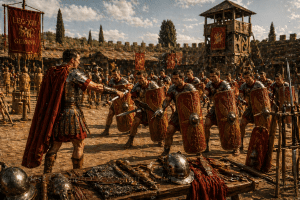
The backbone of every legion was the Roman legionary. These professional soldiers underwent demanding training that prepared them for long marches, construction work, and close combat.
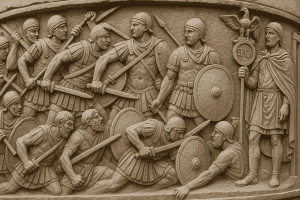
A legionary carried standardized equipment, including the gladius (short sword), pilum (heavy javelin), scutum (large shield), helmet, and body armor. This consistency simplified training and logistics while ensuring that every soldier could fight effectively within the legion’s tactical system.
Military service required physical endurance, discipline, and loyalty. Legionaries often served for decades, developing skills that made the Roman army one of the most respected military forces of the ancient world.
What Is Roman Legion Without Discipline?
The answer to what is roman legion cannot be separated from the concept of discipline. Roman soldiers trained continuously, practicing formations, weapon drills, and coordinated maneuvers until they became instinctive.
Strict regulations governed every aspect of military life. Discipline extended beyond combat to include camp construction, equipment maintenance, and daily routines. Every evening, soldiers built fortified camps that protected the army wherever it traveled.
This emphasis on organization allowed Roman armies to remain effective even under extremely difficult conditions. Discipline was often more important than numbers, giving Roman legions a significant advantage over many opponents.
The Role of Roman Legions in Building the Empire
Roman legions were responsible for much more than winning battles. Wherever they marched, they built roads, bridges, walls, forts, and permanent military camps that strengthened imperial control.
These engineering projects improved communication, facilitated trade, and connected distant provinces with Rome. Many Roman roads remained in use for centuries, demonstrating the remarkable quality of military engineering.
Veteran legionaries frequently settled in conquered territories after completing their service. Their presence helped spread Roman language, customs, laws, and culture throughout the empire.
In this way, the legion served as both a military and administrative institution, contributing to the long-term stability of Roman rule.
Famous Roman Legions
Throughout Roman history, many legions earned lasting reputations for their achievements. Units such as Legio X Equestris, associated with Julius Caesar, and Legio II Augusta, which participated in the conquest of Britain, became famous for their discipline and battlefield success.
Each legion possessed its own number, name, traditions, and symbols. The eagle standard, or aquila, represented the honor of the legion and was defended at all costs.
Legionary identity created a strong sense of loyalty among soldiers. Successes and sacrifices became part of each unit’s history, strengthening morale and reinforcing military cohesion.
Daily Life Inside a Legion
Life within a Roman legion extended far beyond combat. Soldiers spent much of their time training, maintaining equipment, constructing infrastructure, and performing administrative duties.
Daily routines included physical exercise, weapons practice, guard duty, engineering work, and camp maintenance. Even during periods of peace, legionaries remained constantly prepared for military action.
This continuous training ensured that Roman armies could respond quickly to threats while maintaining exceptionally high professional standards.
The Legacy of the Roman Legion
The influence of the Roman legion extends far beyond antiquity. Modern military organizations continue to study Roman discipline, logistics, leadership, and engineering as examples of effective military planning.
The structure of professional armies, standardized equipment, military engineering, and organized logistics all owe something to Roman innovation. Even today, the legion remains a symbol of discipline, efficiency, and resilience.
Archaeological discoveries continue to reveal new information about Roman military life, while historical reconstructions help modern audiences better understand the daily experiences of legionaries.
Why the Roman Legion Still Fascinates Us
The Roman legion represents much more than an army. It symbolizes the organization, determination, and adaptability that enabled Rome to build and govern one of history’s greatest empires.
Its soldiers combined courage with discipline, engineering skills with military training, and loyalty with professionalism. Together, these qualities transformed the legion into one of the most successful military institutions ever created.
To experience the world of Roman legionaries firsthand, visit Res Militares and discover immersive historical reconstructions, authentic military equipment, and exhibitions inspired by the extraordinary legacy of ancient Rome.
FAQ:
What is roman legion?
A Roman legion was a large, highly organized military unit composed mainly of Roman citizens, forming the core of the Roman army during the Republic and the Empire.
How many soldiers were in a Roman legion?
A typical Imperial Roman legion usually consisted of around 5,000 soldiers, although numbers varied depending on the period and military requirements.
Why were Roman legions so successful?
Roman legions combined rigorous training, disciplined formations, standardized equipment, skilled leadership, and advanced engineering, making them one of history’s most effective military forces.