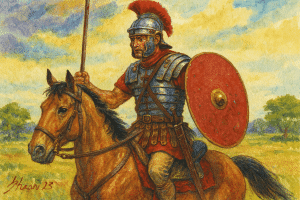
When we picture the mighty Roman legions marching across continents, we imagine discipline, strategy, and power. But behind every victorious campaign was a fundamental necessity: food. A Roman legionary’s stamina, strength, and performance on the battlefield depended heavily on what he ate. This article dives deep into the military diet of Roman soldiers, uncovering what fueled the empire’s most formidable fighting force.
Welcome to “Military Diet Explained”, where history meets nutrition.
The Backbone of Empire: Why the Military Diet Mattered
The Roman military machine was relentless. Soldiers often marched over 20 miles per day, constructed forts, and fought brutal battles. To maintain such a pace, their diet had to be:
- Nutrient-dense
- Sustainable over long campaigns
- Easily transportable and preservable
The military diet wasn’t about pleasure—it was about function. Yet, it was surprisingly balanced and, by ancient standards, even ahead of its time.
The Core Rations of a Roman Legionary
1. Grain – The Staple of Survival
The bulk of a Roman legionary’s diet came from grain, primarily wheat or barley.
- Each soldier was issued about 1.5 kg of grain per day
- Ground into flour and made into panis militaris (military bread)
- Sometimes turned into puls, a thick porridge
This provided carbohydrates for energy and was easy to transport in sacks during long marches.
2. Legumes – The Protein Boost
Roman soldiers supplemented their grain-heavy meals with lentils, chickpeas, and broad beans.
- Rich in plant-based protein
- Added to stews for flavor and sustenance
- Helped prevent malnutrition on long campaigns
Legumes were dried, easy to store, and incredibly resilient in harsh climates.
3. Meat – Occasional Luxury or Necessity?
Contrary to popular belief, meat was not a daily staple. However, it was consumed under certain conditions:
- Salted pork (salsamentum) or bacon was common in rations
- Fresh meat from hunting or local sources
- Occasionally cheese and eggs
Meat was seen as a supplement, not the foundation, of a soldier’s diet.
4. Oil, Salt, and Vinegar – The Hidden Essentials
- Olive oil was used in cooking and as a calorie-dense fat
- Salt preserved food and maintained electrolyte balance
- Posca, a mix of vinegar and water, helped hydrate and prevent bacterial illness
This trifecta of additives made bland food more palatable and increased its shelf life.
5. Fruits and Vegetables – Field Fortification
When available, soldiers ate onions, garlic, cabbage, figs, and apples. These were often foraged or supplied locally.
- Added crucial vitamins and fiber
- Enhanced immune resistance during grueling campaigns
Eating on the Move: Camp Cooking and Field Meals
Roman soldiers cooked in contubernia (groups of 8 men) using:
- Clay or bronze pots
- Iron griddles
- Communal fires
Meals were often simple stews or porridge, seasoned with herbs, vinegar, and sometimes meat. Efficiency and fuel availability shaped how meals were prepared in the field.
Military Diet Explained: A Nutritional Analysis
Modern nutritionists might be surprised by the macronutrient balance in a Roman legionary’s diet:
| Nutrient | Source | Function |
| Carbohydrates | Wheat, barley, bread, puls | Energy for marching and fighting |
| Protein | Legumes, cheese, occasional meat | Muscle repair, endurance |
| Fats | Olive oil, meat | Long-lasting energy and absorption |
| Electrolytes | Salt, vinegar, posca | Hydration, muscle function |
| Vitamins | Foraged vegetables and fruit | Immunity and general health |
Special Rations: Rewards, Punishments, and Rituals
- Wine was issued on occasion, especially after victories.
- Soldiers could receive extra meat or sweets as rewards.
- Reduced rations were used as punishment for misbehavior.
- Food also played a role in religious rituals and sacrifices before battle.
Want to Experience Life as a Roman Legionary?
The best way to truly understand the life of a Roman legionary is to immerse yourself in their world.
At Res Militares – The Roman Soldiers Museum, you can do just that.
Visit our website and contact us for more information—your journey into the past starts here.