Finding the right rome souvenirs shop can turn a simple purchase into a lasting connection with the history of the Eternal City. Rome is full of objects inspired by emperors, legionaries, gladiators, monuments, and ancient symbols, but the most memorable souvenirs are usually those that help you understand what they represent. For visitors interested in Roman military history, archaeology, and the daily life of soldiers, a historically inspired object can become a tangible reminder of what they learned in the city.
What to Look for in a Rome Souvenirs Shop
A good rome souvenirs shop should offer more than generic objects printed with the Colosseum. For history enthusiasts, context matters. A Roman-style helmet, shield, eagle, or legionary figure becomes more interesting when you know the period, function, and symbolism behind it.
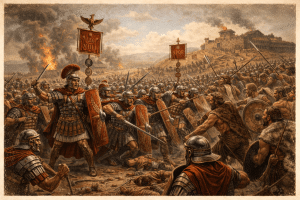
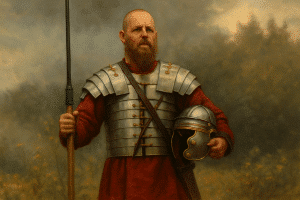
Roman military equipment changed significantly over the centuries. The gladius was a short sword closely associated with Roman infantry, but its form evolved over time. The scutum is strongly linked with legionaries of the Republican and early Imperial periods, while lorica hamata, or chain mail, remained in use for centuries. The famous lorica segmentata, made from articulated metal strips, is especially associated with parts of the early Imperial period, but it was never the only armour worn by Roman soldiers.
These distinctions matter because there was no single “Roman uniform” used throughout Roman history. Equipment varied according to period, military role, region, and available resources.
Roman Military Souvenirs and the Symbols Behind Them
Military-themed objects are especially popular because the Roman army remains one of the most recognizable institutions of antiquity. A legionary was not simply a fighter. Roman soldiers also built roads, constructed forts, guarded frontiers, supported engineering projects, and helped Rome control an enormous territory.
Objects inspired by the aquila, the eagle standard of a legion, carry a specific historical meaning. The eagle represented the honour and identity of the legion and was protected with exceptional care. Other standards, such as the signum, also had military and symbolic functions.
The initials SPQR, from Senatus Populusque Romanus—“The Senate and People of Rome”—are another common motif. They were connected to Roman public authority and civic identity, not only to the army. Today, SPQR remains visible throughout modern Rome.
How to Choose a Rome Souvenirs Shop for Roman History Fans
Look for objects that clearly explain their historical inspiration. Decorative pieces do not need to be exact archaeological reproductions to be enjoyable, but basic information about their period or model makes them more meaningful.
Items inspired by the gladius, pilum, scutum, military standards, helmets, belts, or legionary footwear can appeal to visitors interested in Roman warfare. Books, illustrated guides, maps, and educational reproductions are also strong choices because they provide context rather than decoration alone.
Be cautious with products labelled simply “Roman” when they combine elements from very different centuries. Roman military history stretches from the Republic through the early and late Empire, and its material culture changed continuously.
Souvenirs, Museums, and Historical Experiences in Rome
Traditional museum shops are valuable places to find catalogues, specialist books, postcards, and objects inspired by archaeological collections. Rome’s museums and archaeological sites also provide the original context for statues, inscriptions, armour, weapons, and everyday artefacts.
Res Militares offers a different kind of encounter with Roman history. Rather than presenting itself as a conventional archaeological museum, it is an immersive experience dedicated to Roman military history and culture, using historically inspired reconstructions, equipment, and interpretive content to help visitors approach the world of Roman legionaries in a more tangible way.
Museums preserve and interpret original material culture, while immersive historical experiences can help visitors visualize how equipment was worn, handled, and understood within military life. These approaches can complement each other.
After learning what a shield, helmet, standard, or sword actually represented, a souvenir can carry more meaning. It becomes a reminder not only of Rome as a destination, but of a specific historical story encountered during the visit.
What Makes a Roman Souvenir Worth Taking Home?
The most meaningful Roman souvenirs usually combine three elements: connection to place, historical context, and personal memory. A miniature of Trajan’s Column may recall Rome’s monumental celebration of imperial warfare; a legionary figure may evoke the discipline and organization of the army; a map can illustrate the geographical reach of Roman power at different moments in history.
For younger visitors, educational objects can provide an accessible introduction to ancient history. Collectors may prefer more detailed reproductions connected to specific equipment or periods, while casual travellers may choose a simple object linked to a monument or experience.
Price alone does not determine value. A well-chosen book, map, small replica, or carefully designed keepsake can be more memorable than a larger decorative item with little connection to the past.
Bring Home More Than a Souvenir
Rome offers countless ways to remember a visit, but the best souvenirs are those that deepen rather than flatten the city’s history. Roman civilization developed over many centuries and involved far more than emperors and battles.
If your interest in Roman souvenirs comes from a fascination with legionaries and military culture, visit Res Militares and live the experience firsthand. Explore historically inspired reconstructions, discover how Roman military equipment functioned, and connect the object you take home with a richer understanding of the world that inspired it.
FAQ
What can I buy in a Rome souvenirs shop if I like Roman history?
You may find books, maps, miniature monuments, Roman-inspired figures, decorative replicas, SPQR-themed items, and objects inspired by legionary equipment. For a more meaningful choice, look for items with clear historical context.
What are the best Roman military souvenirs?
Popular options include objects inspired by the gladius, scutum, Roman helmets, military standards, the legionary eagle, and SPQR. Books and illustrated guides are also useful because they explain the history behind the symbols.
Is Res Militares a traditional Roman museum?
No. Res Militares is better described as an immersive experience dedicated to Roman military history and culture. It uses historically inspired reconstructions, equipment, and interpretive content to help visitors explore the world of Roman soldiers in an experiential way.