Roman Empire Augustus and the Birth of Imperial Power
The story of the roman empire augustus begins with one of the most important transformations in world history. Under Augustus, Rome changed from a republic weakened by civil wars into a centralized empire that would dominate the Mediterranean for centuries. Augustus was not merely the first emperor; he was the architect of a political system that combined military authority, propaganda, religion, and administrative reform into a stable imperial structure.
Understanding the roman empire augustus period is essential for anyone interested in Roman military history, politics, and culture. Augustus reshaped Rome through strategic leadership, monumental architecture, and military organization that secured the empire’s future. His reign established foundations that later emperors would follow for generations.
For readers interested in Roman imperial history, military symbolism, and historical reconstructions, come visit Res Militares in person to explore the world of ancient Rome through immersive displays, historical inspiration, and Roman military heritage.
The Rise of Augustus
Before becoming Augustus, he was known as Octavian, the adopted heir of Julius Caesar. After Caesar’s assassination in 44 BCE, Rome descended into chaos and civil war. Octavian emerged as one of several political figures competing for power, eventually forming the Second Triumvirate with Mark Antony and Lepidus.
The decisive turning point came at the Battle of Actium in 31 BCE, where Octavian defeated Antony and Cleopatra. This victory eliminated his greatest rivals and allowed him to consolidate authority over the Roman world.
In 27 BCE, the Roman Senate granted him the title “Augustus,” meaning “revered” or “majestic.” Although he claimed to restore the Republic, Augustus effectively created a new political order centered on imperial power.
Roman Empire Augustus and Political Reform
One of the reasons the roman empire augustus era succeeded was Augustus’ ability to balance absolute authority with traditional Roman values. Rather than openly declaring himself king—a title hated by Romans—he maintained republican institutions while controlling them behind the scenes.
Augustus reformed the Senate, reorganized provincial administration, and strengthened taxation systems. These reforms reduced corruption and improved efficiency across the empire.
He also created a professional civil service and expanded the role of imperial administrators. This bureaucratic structure helped maintain order across vast territories stretching from Spain to the Near East.
The genius of Augustus was political subtlety. He ruled as emperor without fully abandoning republican language and symbolism.
Military Reforms and Imperial Stability
Roman Empire Augustus and the Roman Army
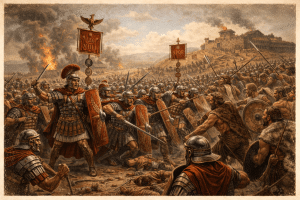
The roman empire augustus period marked a major transformation in Roman military organization. Augustus understood that long-term stability depended on controlling the army.
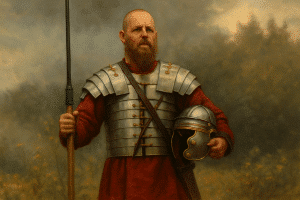
He reduced the number of legions after the civil wars and established a permanent professional military force loyal to the emperor. Legionaries received standardized pay, retirement benefits, and long-term service contracts. Veterans were settled in colonies throughout the empire, helping spread Roman culture and secure frontier regions.
Augustus also created the Praetorian Guard, an elite unit tasked with protecting the emperor and maintaining security in Rome.
These reforms turned the Roman military into a stable institution capable of defending imperial borders while reinforcing political authority.
Expansion and Frontier Policy
Although Augustus preferred stability over reckless conquest, the empire continued to expand during his reign. Roman forces secured territories in Spain, the Alps, the Balkans, and parts of Central Europe.
However, Augustus also recognized the dangers of overexpansion. After the disastrous defeat in the Teutoburg Forest in 9 CE, where three Roman legions were destroyed by Germanic tribes, imperial policy became more defensive.
Natural frontiers such as the Rhine and Danube rivers became critical defensive boundaries. Augustus’ approach balanced military ambition with strategic caution.
Architecture and Propaganda
The roman empire augustus era transformed the appearance of Rome itself. Augustus launched massive building projects designed to glorify the empire and legitimize his rule.
Monuments such as the Forum of Augustus, the Ara Pacis, and the Temple of Mars Ultor reflected themes of peace, military victory, and divine favor. Art and architecture became tools of imperial propaganda.
Augustus famously stated that he “found Rome a city of brick and left it a city of marble.” This transformation symbolized the emergence of imperial grandeur.
Statues, inscriptions, and coins throughout the empire promoted Augustus as the bringer of stability and prosperity after decades of civil conflict.
Religion and Imperial Ideology
Religion played a central role in the roman empire augustus system. Augustus restored traditional temples and priesthoods while linking his rule to divine approval.
He emphasized moral reform, family values, and religious tradition as foundations of Roman identity. The imperial cult, which honored the emperor and his family, gradually expanded throughout the provinces.
By combining religion with politics, Augustus reinforced loyalty to the empire and to himself personally.
Cultural Influence and the Pax Romana
The reign of Augustus initiated the Pax Romana, a long period of relative peace and stability that lasted roughly two centuries. Trade expanded, cities grew, and Roman law spread across conquered territories.
Literature and the arts flourished under imperial patronage. Writers such as Virgil, Horace, and Livy contributed to a cultural program that celebrated Rome’s destiny and Augustus’ leadership.
This cultural development helped unify the empire ideologically as well as politically.
Why Augustus Changed Roman History
The importance of the roman empire augustus era lies in its lasting impact. Augustus created a system capable of surviving long after his death. Future emperors inherited administrative structures, military institutions, and political traditions established during his reign.
His success was not based solely on military victory but on strategic governance, symbolism, and institutional reform. Augustus understood that controlling Rome required more than force—it required legitimacy and stability.
The empire he created became one of the most influential civilizations in human history.
For more articles about Roman emperors, military history, and imperial monuments, visit our website or come discover the world of ancient Rome in person at Res Militares.
FAQ:
Who was Augustus in the Roman Empire?
Augustus was the first Roman emperor and the founder of the imperial system that transformed Rome from a republic into an empire.
Why is the roman empire augustus period important?
Because it established political stability, military reform, and the foundations of the Pax Romana.
How did Augustus strengthen the Roman army?
He created a professional standing army with fixed salaries, retirement benefits, and permanent organization loyal to the emperor.